SDR vs BDR is one of the most confusing questions in B2B sales hiring. The two roles sound alike, and many teams use the titles for the same job.
This guide breaks down the real SDR vs BDR difference and shows what each role pays in 2026. Then it helps you decide which one to hire.
SDR vs BDR: The Short Answer
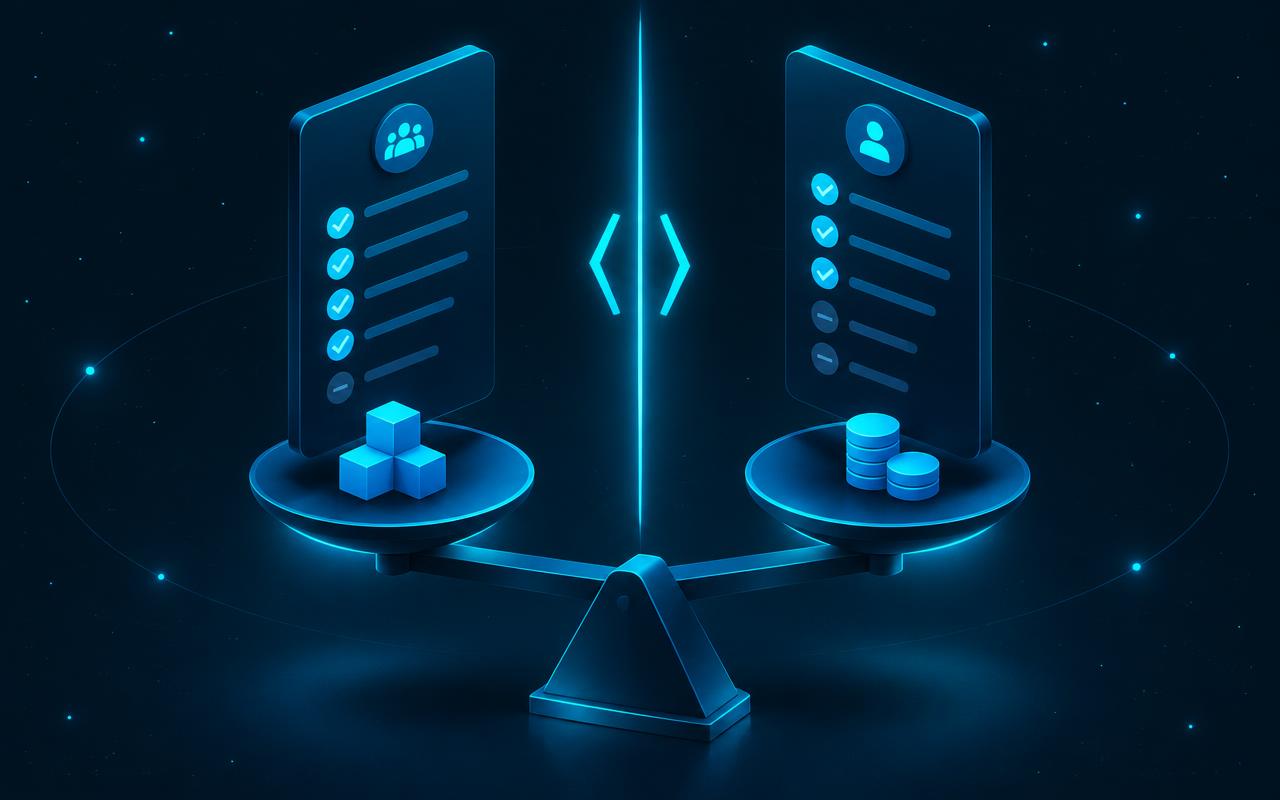
An SDR qualifies inbound leads who already showed interest in your product. A BDR hunts new business through outbound cold outreach. Same funnel stage, opposite starting points.
Think of it as farmer versus hunter. The SDR farms warm interest that comes in. The BDR hunts cold accounts that have never heard of you.
At many companies the two titles mean the same thing, so the job description matters more than the label. According to HubSpot's guide to modern SDR responsibilities, SDRs typically focus on inbound lead qualification while BDRs focus on outbound prospecting and new account development.
What Is an SDR (Sales Development Representative)?
A Sales Development Representative (SDR) works the top of the funnel with inbound and warm leads. These are people who already raised a hand, such as a demo request or a content download.
The SDR qualifies that interest and hands real opportunities to Account Executives. They start conversations. They do not close deals.
The whole game is the qualification bar. A meeting only counts when the buyer actually shows up and fits your ideal profile. Good SDRs also run cold email outreach on warm segments to restart conversations that went quiet.
What Is a BDR (Business Development Representative)?
A Business Development Representative (BDR) prospects outbound into cold accounts. They generate interest from scratch and open new logos.
BDRs live on cold calls and cold email, with LinkedIn as a third touch. Good outbound is a system. It runs on channel selection, timing triggers, a value message, and a weekly feedback loop.
The best BDRs treat cold calling for outbound as a core motion that drives new conversations. They also work by tracking buying signals like funding rounds and new site visits, then reach out when the timing is right.
SDR vs BDR: Key Differences at a Glance
| Factor | SDR | BDR |
|---|---|---|
| Lead source | Inbound and warm leads | Cold, outbound accounts |
| Direction of motion | Answers demand | Creates demand |
| Primary channels | Email, phone follow-up, chat | Cold calls, cold email, LinkedIn |
| Main metric | Qualified meetings from inbound | New meetings from cold outreach |
| Reports to | Sales or marketing ops leader | Sales development leader |
| Typical background | First sales job, learns qualification | First sales job, comfortable with rejection |
Inbound versus outbound is the real dividing line. The SDR answers demand that already exists, while the BDR creates demand where there was none. Titles blur because many teams run a single role and pick whichever name they prefer.
SDR vs BDR Salary and 2026 Benchmarks
How much do SDRs and BDRs make? The short answer is about $80,000 to $85,000 in total pay for a US rep in 2026. OTE means on-target earnings, which is base salary plus the commission you earn at quota.
RepVue reports the median SDR on-target earnings in the US at $85,000, with a median base of $60,000, from 8,422 verified submissions. About 57 percent of those reps attained quota.
The Bridge Group's 2025 research puts median OTE slightly lower at $80,000. That runs on a 68:32 base-to-variable split, which is $55,000 base and $25,000 variable.
Base pay alone runs lower because it excludes commission. Coursera's aggregation of five job-listing sites puts average SDR base pay across job platforms between $48,973 and $66,577.
No major salary source separates BDR pay from SDR pay. RepVue and the Bridge Group track them as one group, so the same numbers apply to both roles.
What SDRs and BDRs Actually Cost to Employ
Salary is only part of what a rep costs. Benefits, payroll taxes, tools, and management push the real number much higher.
The US Bureau of Labor Statistics reports that employer benefit costs averaged $14.01 per hour worked and accounted for 30.1 percent of total compensation in private industry. In plain terms, benefits make up roughly 30 percent of what an employer pays for that worker.
Here is a worked example for one in-house SDR in the first year, based on BizDev Labs' in-house cost comparison:
- Base pay near $63,000 in on-target earnings.
- Benefits and payroll taxes worth about 30 percent more, per BizDev Labs' in-house cost estimate.
- Manager overhead near $120,000 fully loaded.
- Tools and data near $60,000 in year one.
That math is why many teams compare building an SDR team in-house against outsourcing before they commit to salaries.
Performance Benchmarks: Quota, Ramp, and Tenure
Set expectations before you hire. Most reps do not blow past quota. Roughly 57 to 60 percent hit their number, depending on the source.
The Bridge Group calls 60 percent the lowest attainment rate in its study history. Average ramp time is 3.0 months, and average tenure is 1.9 years. Plan for reps to leave and for pipeline to keep filling during ramp.
Key point: a running system beats a single struggling rep. At BizDev Labs, one cold caller makes about 1,000 dials a week, and four callers cover roughly 4,000 companies each quarter.
Across those programs, cold outreach converts to warm at 6 to 7 percent. That compares to a 2 percent benchmark for a BDR at quota.
How SDRs and BDRs Fit Into a Sales Team
SDRs and BDRs sit at the top of the funnel. They book qualified meetings and feed Account Executives, who run the demos and close the deals.
The common setup asks one rep to build lists, write copy, make calls, and manage LinkedIn. That rep burns out, and meeting quality drops.
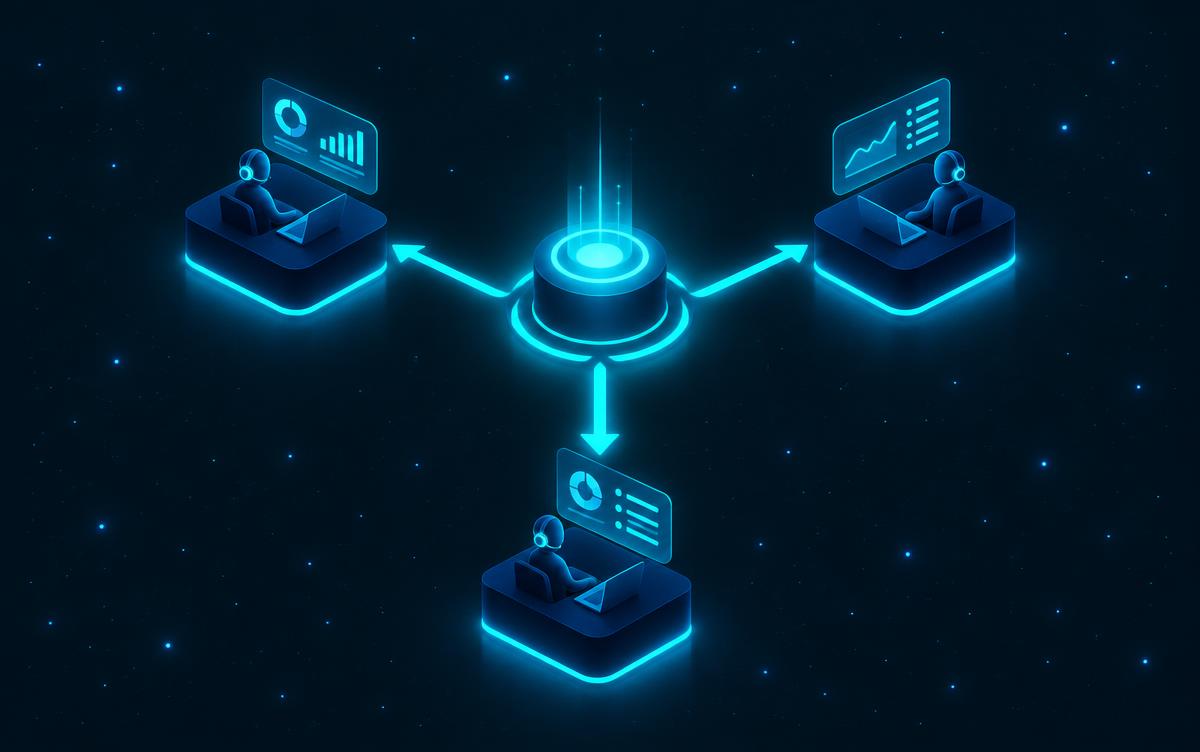
A stronger setup splits the work. BizDev Labs runs an outbound pod model where each person owns one piece of the engine. A GTM engineer and a strategist lead the pod, and dedicated specialists each own one channel, such as cold email or cold calling.
The prospect sees one name, and several specialists work behind it. Each has 4 to 6 years in their channel, with no juniors on the account.
Should You Hire an SDR, a BDR, or Both?
Match the role to where your pipeline comes from. A short decision guide:
- Key point: hire an SDR when strong inbound demand needs qualifying.
- Key point: hire a BDR when you must build pipeline from cold accounts.
- Key point: test the motion with an outsourced SDR team before you commit to salaries.
Outsourcing lets you prove the motion first, then build in-house with real data. BizDev Labs has run this for 250 B2B companies, with programs live in 14 days and first meetings in week three. You keep the documented outbound sales playbook either way.
Career Path: Where SDR and BDR Roles Lead
Both roles are entry points into sales. Most people start here to learn the trade. The common path runs from SDR or BDR to Account Executive, and later into senior AE or sales leadership roles.
Industry observers often cite 18 to 24 months in the role before a move up. Treat that as a rough range instead of a hard rule.
Promotions now make up a smaller share of role exits than in 2020, according to the Bridge Group. Advancement is slower than it used to be.
BizDev Labs wants to make the BDR role a lifelong career rather than a two-year stopover. The skills you build here, like channel math and reading a buying committee, carry into every sales job that follows.
Frequently Asked Questions
Is SDR the same as BDR? At many companies, yes; where teams separate them, SDRs handle inbound leads and BDRs handle cold outbound.
Do BDRs earn more than SDRs? No major salary source separates the two, so the same benchmarks apply, near $80,000 to $85,000 OTE in 2026.
Is SDR an entry-level position? Yes, it is one of the most common first jobs in B2B sales.
Should a startup hire an SDR or a BDR? Hire an SDR if inbound demand is strong, and a BDR if you need to build pipeline from cold accounts.
How long do people stay in the role? Average tenure is about 1.9 years, according to the Bridge Group.
Is a BDR role better than an SDR role? Neither is better; the right fit depends on whether you prefer creating demand or qualifying it.
How to Build Your Outbound Engine
Match the role to your pipeline source, then staff it with specialists who own one channel each. Measure the meetings that actually get held.
BizDev Labs builds and runs that engine for you. Ready to move? Book a strategy call to see what fits your pipeline. your pipeline.
Not ready for a call? See what's broken first.
Answer 30 questions and see where your outbound motion is breaking.
Book more qualified meetings, starting in 14 days
Five specialists across strategy, lists, email, cold calling and LinkedIn, running your outbound end to end.